

SDFT Injury
- Case Study 1
SDFT Injury
Successful Rehabilitation of a Severe Superficial Digital Flexor Tendon Injury: Insights from Ultrasound Imaging
Patient Profile
Age: 21-year-old
Height: 14.3 hands
Gender: Mare
Injury: Incurred field injury, diagnosed with severe superficial digital flexor tendon tendonitis
Date of Injury: 05.04.2023
First Scan: 11.04.2023 - 1 week post injury
The scan showed severe disruption of fibre pattern, loss of tendon echogenicity and swelling.
EqueStride device was applied - 2 weeks post-injury


1st Re-Scan: 12.05.2024 - 5 weeks Post-Injury
The scan revealed significant swelling and marked oedema within the tendon, along with severe disruption of the fibre pattern.
There was a concern that reinjury may be occurring during transitions between lying down and standing. To mitigate this risk, we initiated a gradual acclimatisation protocol over three weeks to build skin tolerance and allow for continuous wear of the EqueStride device.


Rehabilitation Protocol:
-
Exercise: Light hand-walking for five minutes, three times daily.
-
Support: Continuous 24/7 stable support using the EqueStride. The device was removed twice daily for skin checks.
-
Week 9 post-injury: Hand-walking duration increased, with the device set to high support.
2nd Re-Scan: 20.06.2023 - 11 weeks Post-Injury
Improved scan images, granulation tissue filling in the tendon, still disrupted longitudinal fibre pattern, still prominent enlargement of the tendon
Exercise: Started to increase walking exercise and reduce stable support


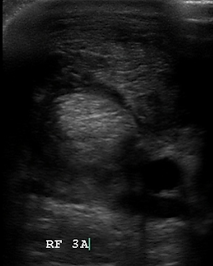


3rd Re-Scan: 25.07.2023 - 16 Weeks Post-Injury
Excellent progress on the scan, granulation tissue completely filled up the lesion, and a greatly improved longitudinal fibre pattern is present.
Exercise: 30 minutes of walk 2 to 3 times daily, plus small paddock turn out with EqueStride support


4th Re-Scan: 29.08.2023 - 21 Weeks Post-Injury
Excellent longitudinal fibre pattern alignment
Introduced ridden exercise. Sound at walk and trot without support


5th Re-Scan: 10.10.2023 - 6 Months Post-Injury
Exercise:
The mare was ridden 3 to 4 times per week with the EqueStride device, plus small paddock turn out.


Progress Update:
The mare continued to make excellent progress, with a steady increase in ridden exercise - walk, trot, and canter - beginning in November. By April 2024, she had successfully returned to both hacking and schooling, performing at a level exceeding her pre-injury baseline.
18-Month Milestone:
At 18 months post-injury, there have been no reported setbacks or signs of reinjury, indicating a highly successful rehabilitation outcome.